Exposition in Time and Again Breece Pancake

1.
…I want to know my country. I desire to bear upon, taste, odor and hear also every bit see this land. If it stinks of manure on the fields I want to know it. If the water on whatever given mount is sweet I want to know just how sweet. I want to hear the wind in the grass as well equally see it push the trees effectually. But most of all I want to feel all of these things. I want to know firsthand. I don't want the Greyhound Company or whatsoever other pumping dried reconditioned air into my lungs or pre-recorded sound into my ears. If I have to be an American (and I practice) I don't want to be sold short on my own country.
Those words were not written by Jack Kerouac or Woody Guthrie. If y'all paste them into Google the results you get refer mostly to Walt Whitman poems. "Song of Myself." "Leaves of Grass." "Song of the Open Road." The truth is a xix-twelvemonth-old child named Breece Pancake from Milton, West Virginia wrote those lines in a alphabetic character to his female parent in 1972.
Breece D'J Pancake would have turned 60-5 this month. Pancake may have been the best American writer of his generation, but many people still don't know who the hell he was. He put a shotgun in his oral cavity on Palm Sunday in 1979 when he was just 20-six. He left twelve posthumously-published short stories, The Stories of Breece D'J Pancake, which were nominated for the Pulitzer Prize.
Pancake has go a semi-mythical effigy of American literature, a hillbilly Hemingway for those few — heavy on writers and academicians — who exercise know of him. Parts of the myth he created for himself through the fashion he lived his life and the foggy circumstances surrounding his death. The rest of the myth we've created ourselves around the legacy of his extraordinary writing.
Kurt Vonnegut, writing in a letter to John Casey, Pancake'due south teacher and close friend, wrote of Pancake: "I requite you my word of honor that he is only the best author, the about sincere author I've ever read. What I suspect is that it hurt too much, was no fun at all to be that good. Y'all and I volition never know." Joyce Carol Oates has compared him to Hemingway and Jayne Anne Phillips called his story collection "no less than an American Dubliners." Mark Knopfler's song "River Town" was inspired by one of Pancake'southward stories. "He (Pancake) could really have been the future." Even the singer Lorde is a fan, demonstrating that Pancake's writing has the ability to resonate with a younger generation thirty-eight years subsequently his death.
two.
I open up the truck'south door, step onto the brick side street. I wait at Company Hill again, all sort of worn downwards and round. A long fourth dimension ago it was real craggy, and stood like an island in the Teays River. It took over a million years to make that smooth little hill, and I've looked all over it for trilobites. I think how it has always been there and always will be, least for as long as it matters. The air is smoky with summertime. A agglomeration of starlings swim over me. I was built-in in this country and I take never very much wanted to leave. I remember Pop's dead optics looking at me. They were real dry, and that took something out of me. I close the door, head for the café.
-from "Trilobites"
Breece Pancake was from Appalachia. The town of Milton lays difficult by Interstate 64, halfway between Charleston and Huntington along old Route sixty. The landscape is flatter here, more Midwest than mount. I have the get out and drive back and forth looking for the small white firm with the gabled front I'd seen in the picture show. The public library where his female parent worked is yet here. And so is the small cluster of Principal Street buildings, one of which used to house the West Virginian eatery, the model for the café in "Trilobites." It's a Mexican restaurant now and the brick streets take been paved over. I take it all in. Kids riding bikes. The old Methodist church building. The funeral home. I go lost in a neighborhood of minor houses and refuse a narrow extension and at that place is the cemetery, worn cedar copse lining the hill. He'due south up there somewhere. I realize he could probably run into this hill from behind his house. I continue on. Merely the quondam house is gone. The barn too. There'due south a Go-Mart and a Biscuit Earth restaurant where it once stood. It looks just like the rest of America now. There is nada to see hither.
"Trilobites" is Pancake's almost well-known story, the first to be published past The Atlantic, and the one that introduced him to America. Pancake's stories all share that potent sense of identify — his native W Virginia — and reflect his particular Appalachian experience. His distant cousin, the acclaimed writer Ann Pancake, never met Breece. In her wonderful essay, "Brush Breaker," she admonishes the critics who sometimes accuse him of capitalizing on narrow cultural stereotypes or of grade appropriation:
What Breece does is dishonored by the give-and-take "represent." His art does not evoke. It invokes. Out of the immateriality of linguistic communication Breece generates the rumple of West Virginia country, the texture of its trees, the odor of its weather, the taste of clay and air, and most remarkable of all, he wraps it all in that complex caul of dear and detest, longing and grief, beauty and repulsion, that shrouds the Due west Virginian heart when information technology contemplates its identify. For me, the stories' subject affair is secondary…
But his writing should not exist valued solely for its descriptive ability of place either, argues Andre Dubus Three:
It would be a fault to consider these stories merely regional, for they get in besides securely for that; by giving us the hollows of West Virginia, its farms and coal mines, barrooms and motels, fighting grounds and hunting grounds and burying grounds, just, most significantly, by giving us its people in all of their tangled humanity, Pancake has achieved the truly universal.
3.
"This story is virtually learning how to fight fate."
-Pancake's handwritten note on his story, "A Room Forever"
Breece Pancake could see the future of America and it must have scared the hell out of him. Born in 1952 and coming of historic period in the late '60'south and early on 70's, he was office of the first generation of Appalachian writers to experience and benefit from the mail service-Globe War 2 industrial boom and its associated rise in standards of living, too equally to meet the beginnings of its collapse. Simply as many "Southern" writers of the preceding generation were shaped by their own detail Deep S rural surround, Jim Crow, and the Great Depression, Pancake's writing was informed by his own place and fourth dimension: the northern Appalachians, more Rust Belt than Dixie, after electrification and interstate highways, the Slap-up Social club and television had come to the mountains. He had travelled to the American southwest and California and United mexican states. He'd spent time in Washington, DC. Pancake was no rube come downward from the hills in buckskins, every bit is sometimes portrayed.
While many of his themes, characters and settings appear in "traditional" forms that could accept just as easily been penned past earlier Southern authors, his writing is nothing like theirs. Embedded subtly within both his stories and personal letters are references and commentaries on a litany of more mod concerns cogitating of America's cultural bug of his fourth dimension: the Vietnam War; the '73 Oil Crisis; labor's decline; women'south liberation; racial equality; drug corruption; economic stagnation; environmentalism; and the growing urban/rural cultural divide. In some ways, it's equally if Pancake was a canary somewhere deep in the American coal mine, warning us of the methane building up, and of the explosion that would inevitably follow. Unfortunately, the canary is e'er the first to die.
Pancake, defenseless upward in a fast-changing America, still preferred to write on his old 1920'due south Underwood typewriter. He longed for literary success like Sherwood Anderson and Hemingway, two of his literary idols. His middle-form youth was spent similar to many in Milton, hunting, fishing, and hiking the woods along the ancient Teays River Valley looking for fossils. He wrote brusque articles for the local newspaper, went to summertime camp sponsored past Union-Carbide, his male parent's employer. He loved the folk singers Phil Ochs and Gordon Lightfoot yet he scrawled the lyrics of Led Zeppelin'southward "Stairway to Sky" on the cover of his sketch pad.
His childhood friend, Rick Blenko, remembers spending days with Breece as ii kids "not quite plumbing equipment in," cruising around Milton in Pancake's Volkswagen Fastback and going to Clint Eastwood movies. "Breece would sometimes mimic the wearing apparel of Eastwood, wearing Johdpur boots, a Mexican coating slung over his shoulder and smoking cigarillos." They were enthralled by the BBC television show The Prisoner, a sci-fi, cold war, psycho/spy-thriller that developed a cult-like following. "I really liked the "Prisoner" logo he had custom-made and glued on the left side of the dash," says Blenko, who also recalls belatedly-night drag races and spins through neighbor'south lawns. "My thoughts of Breece? As you go through life, information technology's amazing what y'all can do if you take ideas, bulldoze, appetite sometimes driven by great angst. Breece superseded annihilation he could have imagined. Had he lived, I remember he would have been writing novels and a globe course storyteller. When y'all die, you are fixed in that age yous died, so Breece for me is always in his 20's."
four.
Pancake began writing in earnest during the aftermath of Watergate. The country was mired in the malaise of Ford and Carter. His stories, reflecting both the political/economic times and elements of his ain personality, are oftentimes described every bit "dark" or "depressing" and his characters as feeling trapped by their own circumstances, defenseless between two pulling worlds. Later graduating from Marshall University in 1974, he was teaching at military academies in Fork Union and Staunton, Virginia, first to refine and develop his ain writing voice, when he met John Casey in the Jump of 1975. Casey, who deservedly gets credit for "discovering" Pancake and bringing him to the University of Virginia a year later, writes in the Afterword to Stories, "Breece didn't know how good he was; he didn't know how much he knew; he didn't know that he was a swan instead of an ugly duckling."
At UVA, Pancake quickly came to despise the genteel grade-snobbery he felt in Charlottesville, a town that has perfected it to an fine art grade. I of Pancake's teachers, the British poet Richard Jones, one time wrote to him of his fourth dimension living in Charlottesville, "There's a peculiar unreality in our Virginian lives. We bladder on a sea flavoured with apricot brandy and never seem to go our feet down to earth." Like many W Virginians of the great diaspora, still, Pancake'south feet were yet planted firmly in the night clay and rock scree of his native State. Despite his pocket-sized simply center-class upbringing in Milton, he always felt himself an outsider in the much-tonier Charlottesville.
One friendship he did course was with the author James Alan McPherson, who had just moved from Baltimore to teach at UVA. McPherson, who would become the first African-American to win the Pulitzer Prize for Fiction, shared the social pressures of beingness viewed equally an outsider in Charlottesville. "Breece Pancake was a West Virginian, that peculiar kind of mountain-bred southerner, or office-southerner, who was just as alienated as I was in the hushed gentility of Wilson Hall," he wrote.
five.
"I terminate in front of the omnibus station, wait in on the waiting people, and recollect about all the places they are going. Only I know they can't run away from it or potable their mode out of it or die to get rid of it. It's always there, you only look at somebody and they give you a look like the Wrath of God."
– from "A Room Forever"
The sky is a perfect bluish. The rolling hills overlap their shades. Brilliant dapples of the pinkish and creamy white of redbud and dogwood blossoms pock the textures of green. Information technology is springtime in Virginia. Driving into Charlottesville'southward Farmington Country Club I cross over the railroad tracks then drive up a narrow entry road flanked past sentries of old cedars. It takes me past the golf course and pond pool lined past whitewashed horse stables, by the lawn tennis courts and the white-columned clubhouse originally designed by Thomas Jefferson in 1803 as a plantation dwelling house. Workers are cutting the grass low, manicuring the tees and greens, making things perfect. A fiddling further on the road dips and curves into a small wood and becomes Blue Ridge Lane. A cluster of houses tuck themselves behind round driveways, alpine boxwood hedges and blooming azaleas, hidden from the road the way multi-million dollar houses often are. The houses front the sloping fairway and I tin can glimpse through the onetime trees the domed clubhouse looming at the top of the hill and, farther to the west, the even taller mountains in the distance. It is a pastoral scene. A polo-shirted man driving a golf game cart waves and smiles. Information technology is hard to imagine that anything could ever go wrong on Blue Ridge Lane.
When Pancake was accepted into the graduate writing program at UVA and moved here, Farmington Country Society all the same had a whites-only membership policy and had been embroiled in controversy for a number of years. Information technology even counted every bit one of its members then-UVA President Frank Hereford. This is where Pancake lived and wrote and worked while he was in Charlottesville, in a rented room in the home of Virginia and Everett Meade on the club grounds. To supplement his meager instruction stipend, he worked in the kitchen of the clubhouse grill, serving up sandwiches to the golfers and the swim moms. He abhorred the grade and racial divisions he before long plant. In a letter to his mother he wrote of a stinging chat with his new landlady:
Mrs. Meade is throwing a political party for the Eng. dept. and had the gall to inquire me to tend bar. Said if I didn't, she'd have to hire a colored, and they don't mix a good potable. That tells me where I stand as a Hillbilly — one notch above the colored — only because I can mix a skillful beverage. If Mrs. Meade forgets herself and invites me, I'll reject on the ground of not having whatever shoes, and having to tend my still and welfare check.
I don't bother looking for the address to the old Meade house at Ane Blue Ridge Lane — the house numbers have all been inverse. At that place are discreetly-mounted cameras and security signs. The Meades had a gardener dig up and remove the blood-stained dirt nether the apple tree tree years agone. It looks just like a postcard. There is goose egg to run across hither anymore.
vi.
"If only one thing is true to being a author, it is to remain at once the most moral human being and most repentant sinner God could want."
– Breece Pancake, scribbled note
Pancake had a moralistic streak that may have been a reflection of his traditional upbringing or a counter-reaction to the loosening mores of the '60's and '70'due south and his own internal struggles. Despite frequent inclusions of sex and violence within his own stories, he was not a fan of Allen Ginsberg. "Ginsberg idea he had something new when he incorporated perversion into poetry, merely Sophocles wrote about a son who killed his father and married his mother. This was written nearly iv thousand years ago and information technology'southward much finer poetry than 'Howl,'" he wrote in a letter of the alphabet to his parents.
But Pancake also seemed to be trying to notice a middle, more than progressive ground, as he wrote in the same letter: "I guess I find fundamentalists — hard-shells, foot-washers — even Methodists a bit difficult to take at times. Super-dedicated people bore me. They accept no humor, no reception to different ideas, nothing — only their cause, and that makes them singly hard-headed, and generally sickening."
This inner struggle to ascertain for himself what is moral can be found throughout the characters in Pancake's stories and in his letters. It also played out in his life through his growing religiosity. Having been raised a temperate Methodist he was an enthusiastic convert to Catholicism in Charlottesville, even joining the Knights of Columbus chapter of St. Thomas Aquinas parish. Despite his continual money worries, he donated all of the $750 he earned from selling "Trilobites" to the church building. John Casey, who Breece had asked to sponsor him and act as his religious godfather, wrote, "As with his other knowledge and art, he took in his religion with intensity, nigh as if he had a unlike, deeper measure of fourth dimension. He was soon an older Catholic than I was. I began to feel that not just did he learn things fast, absorb them fast, but he anile them fast."
Barbara Dignon was a young organizer of church social events. "Breece seemed to ever be nearby, not in the group, but near enough to hear conversations…I tin can't remember him e'er joining in. I think he was looking for a family to belong to. But he didn't have the social skills needed to do that. He broke my heart."
Pancake, despite his social anxieties, did manage to develop several friendships with women while in Charlottesville. The most serious was with Emily Miller, a beau UVA educatee. Miller'southward parents actively discouraged her relationship with Pancake, and she would become the 2d woman to turn down an offer of marriage from Pancake, following a broken date while he was still at Marshall. He believed it was because Miller'south parents, being "a proficient Southern Virginia family" from Richmond, felt he was not a worthy suitor and the rejection appears to have profoundly affected him. In his final letter to John Casey, he discussed his love for her and wrote "I'm not expert enough to work or marry, but I'm good enough to write."
Pancake was clearly a torn man at the time of his expiry, heartsick, worried near coin and jobs, drinking, and suffering from the loneliness he felt in Charlottesville. He had been shaken by the deaths of his father from Multiple Sclerosis and one of his all-time friends in a car blow several years earlier. His letters begin to speak cryptically of premonitions of his own death. In the end, information technology's a common story.
7.
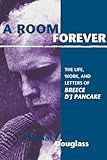 I achieve into the final acid-free archival box of the Breece Pancake collection housed in W Virginia University's Wise Library. Unlike the other ten boxes filled with his letters and story drafts (Pancake was a tireless cocky-editor, oftentimes rewriting his stories twenty times,) this box holds simply two items: a heavily tabbed and annotated Male monarch James Bible and a minor, simple cross made from palm fronds. I lift the cross out and concord it in my hand and my listen begins to run. I'd known most Pancake for some years having grown up and attended college in West Virginia before — simply as he had — being accustomed to graduate schoolhouse at UVA. But I hadn't fallen down the Pancake rabbit hole until I read Thomas E. Douglass's A Room Forever, a comprehensive (and the simply) biography of Pancake.
I stare at the twined palm, twirl information technology in my fingers. It was stuck inside his bible, the one he had tabbed and highlighted in brightly-colored markers with passages that reference "poetic woods" — lyrical verses filled with words of figs and apple tree copse, mountains and flora. There is no mode to know for sure when the pocket-sized cross was placed there.
In a letter to his mother several weeks before he shot himself, Pancake describes a dream he had. Similar his writing, it is filled with both beautiful and trigger-happy imagery.
Last night I dreamed of the "happy hunting ground." I passed through a identify of bones that looked man, just weren't—the skulls were wrong. Then I came to a place where the days were the best of every season, the sweetest air and water in Spring, and so the dry heat where deer brand dust in the road, the fog of autumn with practiced leaves. And you could shoot without a gun, never impale, but the rabbits would practise a footling trip the light fantastic, all every bit if it were a game, and they were playing information technology too. So Winter came with heavy pulverization-snow, and big deer, horses, goats and buffeloes [sic] — all white — snorted, tossed their heads, and I lay downwards with my Regular army blanket, made my bed in the snow, so dreamed within the dream. I dreamed I was at Fleety's, and she told me the basic were poor people killed by bandits, and she took me back to the place, and under a huge rock where no calorie-free should accept shown, a cave well-nigh, was a dogwood tree. It glowed the kind of red those trees get at sundown, the buds were regal in that weird light, and a madman came out with an axe and chopped at the skulls, trying to make them human being-looking. Then I went back to the other side of both dreams.
8.
"I think he threw himself into the faces of the gods…I retrieve that Breece wanted beloved, the certainty of dear, more than anything else in the globe."
-James McPherson in a alphabetic character to Breece's Mother
In his volume, Myth and Reality, the philosopher Mircea Eliade speaks of the world as composed of 2 parts, the "sacred" and the "profane," and of a "nostalgia for the primordial." "Exile is amidst the profoundest metaphors for all human life," he wrote.
Breece Pancake wrote a note on a form describing what "Trilobites" was about: "For me at to the lowest degree, we are suckers for the roots that agree us." He could never escape his memories of the country, the civilisation, the people that had formed him, but as the ancient Teays had carved out and scoured the valley he knew and then well. He was a man trapped and overwhelmed by his own uniquely American nostalgia, a nostalgia for things that once were and no longer are.
In her essay "On Nostalgia," Elizabeth Evitts Dickinson writes, "The danger with nostalgia is that it does non liberate the mind; information technology traps it. Let's utilise a nostalgic metaphor and compare it to amber. The mind, under nostalgia, becomes a fossil, entombed in beloved-hued resin."
A fossil. Like a trilobite. What was once alive is at present only stone. It'southward all that is left for u.s. to build our myths upon. Sometimes information technology is enough.
schullertince1996.blogspot.com
Source: https://themillions.com/2017/06/american-myth-short-beautiful-life-breece-dj-pancake.html
0 Response to "Exposition in Time and Again Breece Pancake"
Post a Comment